
KEY POINTS
- Copper 360 found copper mineralisation 16 metres ahead of its planned target at Rietberg mine.
- Initial assays returned copper grades ranging from 0.48% to 1.50%.
- The discovery could indicate an additional mineralised zone, but the existing mine plan remains unchanged.
South African copper producer Copper 360 has intersected copper sulphide mineralisation earlier than expected during underground development at its Rietberg mine in the Northern Cape, raising the possibility that the deposit extends beyond the company’s existing geological model.
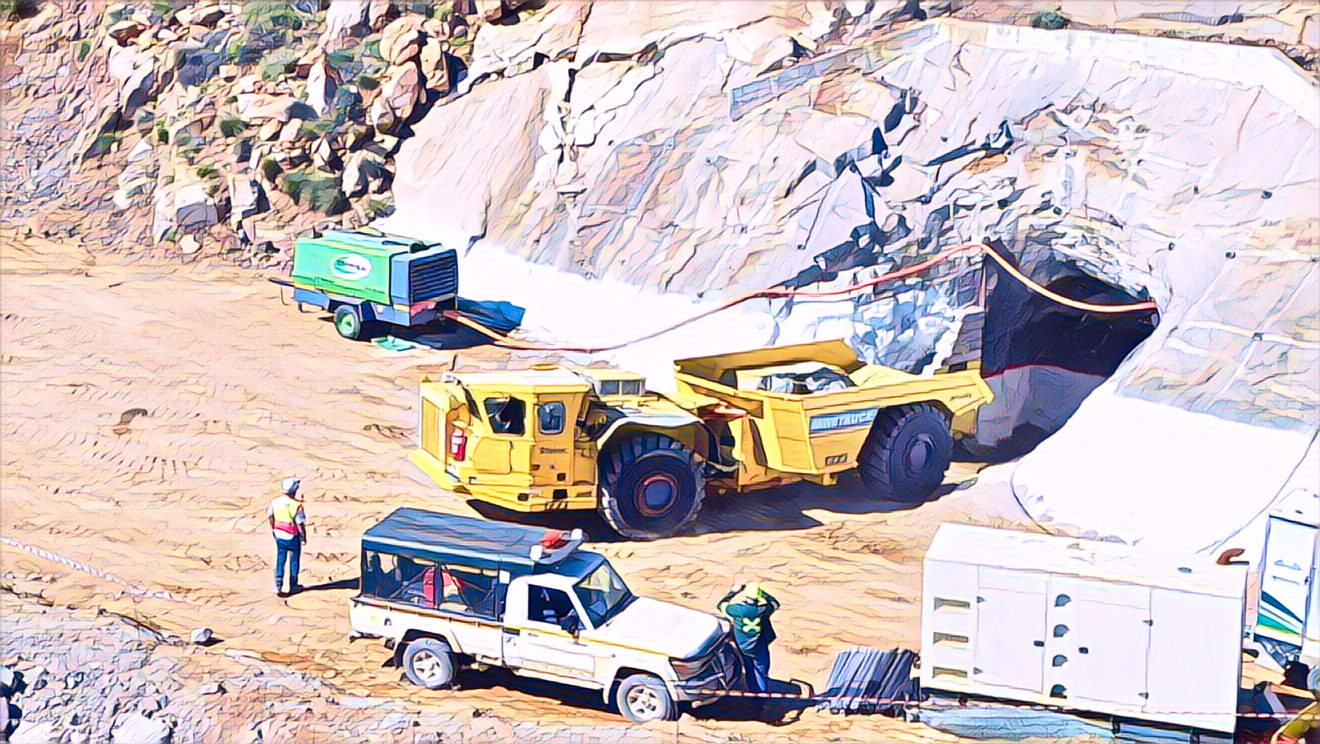
The Johannesburg Stock Exchange-listed company announced that its underground incline intersected the mineralisation approximately 16 metres before reaching the planned 300 Level (300L) elevation.
The discovery was made on October 6, 2026, during the development of an incline connecting the 400 Level to the 300 Level.
The intersection could indicate that the known mineralised zone extends further than previously mapped or that a separate mineralised body exists nearby.
Initial assays from bulk samples returned representative total copper grades ranging from 0.48% to 1.50%. Copper 360 said the results would be investigated further to establish the extent and geological significance of the mineralisation.
Initial samples confirm copper sulphides
Following the discovery, Copper 360’s management initiated geological mapping and sampling to examine the intersection.
The mineralisation occurs in mafic rocks belonging to the Koperberg Suite, with visible bornite and chalcopyrite identified in the exposed rock. Both minerals are copper-bearing sulphides and are relevant indicators of copper mineralisation.
Development of the incline through the intersection exposed approximately six metres of mineralised mafic rock.
To obtain representative assay results, the company collected two composite samples from a stockpile of the mineralised material. The samples were crushed to a particle size of less than 10 millimetres, homogenised using the coning-and-quartering method and submitted for laboratory analysis.
The samples were analysed for total sulphide copper at QLS Laboratory in Springbok. The company described the laboratory as unaccredited.
Copper 360 did not conduct acid-soluble copper analysis because no oxide copper minerals were observed at the intersection. It also noted that the discovery lies well below the known oxide and transition zones.
Quality control samples were included in the testing process, with all results falling within acceptable industry limits, according to the company.