KEY POINTS
- World Bank says Simandou can transform Guinea’s economy beyond mining.
- Guinea expects Simandou revenues to support jobs, infrastructure and diversification.
- The project shipped 6.8 million tonnes of iron ore in the first half of 2026
The World Bank has urged Guinea to use revenue from its giant Simandou iron ore project to diversify the economy, create jobs and support long-term development.
Speaking in Conakry during the signing of a new financing agreement, World Bank Vice President for Western and Central Africa Ousmane Diagana said Simandou could become a major turning point for the West African country if its mineral wealth is converted into broader economic opportunities.
Diagana said Guinea should look beyond the volume of iron ore it can export and focus on the jobs, investments, businesses and industries that the project can generate.
The World Bank’s message comes as Simandou moves into production and Guinea prepares for a major expansion of investment across several sectors.
The comments were made during the signing of a $320.8 million financing package, equivalent to about $460 million, to support Guinea’s agriculture, energy and tax administration sectors.
The funding forms part of a much larger World Bank country partnership programme worth about $3 billion and covering the 2027 to 2033 period.
The financing is expected to support Guinea’s efforts to strengthen key parts of its economy while reducing its dependence on mining.
The timing is significant because the country’s government is also implementing its Simandou 2040 development plan, which aims to attract about $300 billion in investment across multiple sectors by the end of the next decade.
Guinea wants more than iron ore exports
Guinea’s Economy, Finance and Budget Minister Mariama Ciré Sylla said the country wants to ensure Simandou creates lasting benefits for its population.
She said the government’s objective is to turn the country’s mineral wealth into sustainable shared prosperity by increasing local value addition, expanding production capacity and developing processing industries.
That approach could help Guinea capture more economic value from its natural resources instead of relying primarily on exporting raw minerals.
The government is also expected to use increased mining revenues to support infrastructure and other areas of the economy that can create opportunities beyond the mining industry.
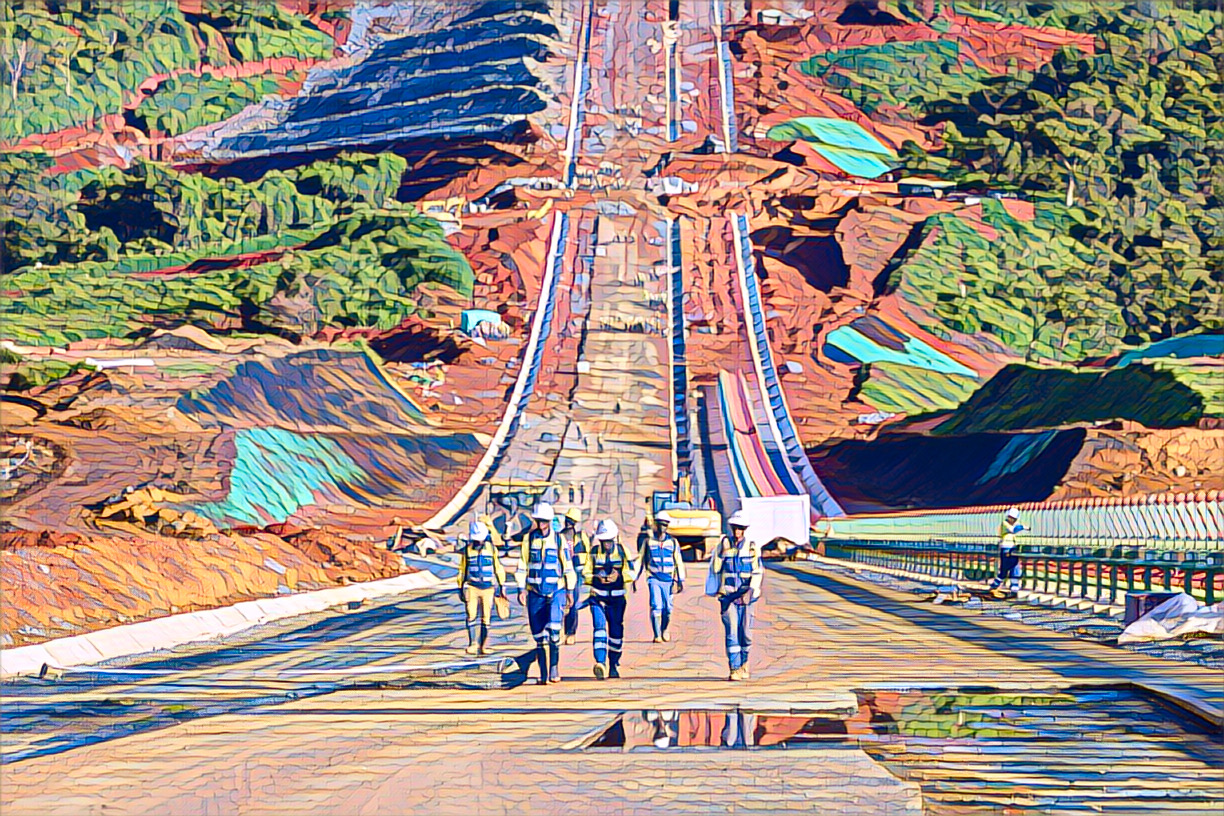
The Simandou project began production in November and shipped 6.8 million tonnes of iron ore during the first half of 2026.
The project is one of the world’s largest undeveloped iron ore deposits and has attracted major international mining and industrial companies.
Blocks 1 and 2 are controlled by the Baowu Winning Consortium Simandou, backed by Chinese companies including China Baowu Steel Group.
Rio Tinto and Aluminum Corporation of China, also known as Chinalco, control Blocks 3 and 4.