
KEY POINTS
- A tailings dam at Samancor’s Dikwena Chrome mine near Brits collapsed, releasing almost all the material in one compartment.
- No casualties were reported, but mine infrastructure, a railway line, powerlines and a watercourse were affected.
- Authorities have halted further tailings deposits while Samancor begins clean-up and investigations into the failure.
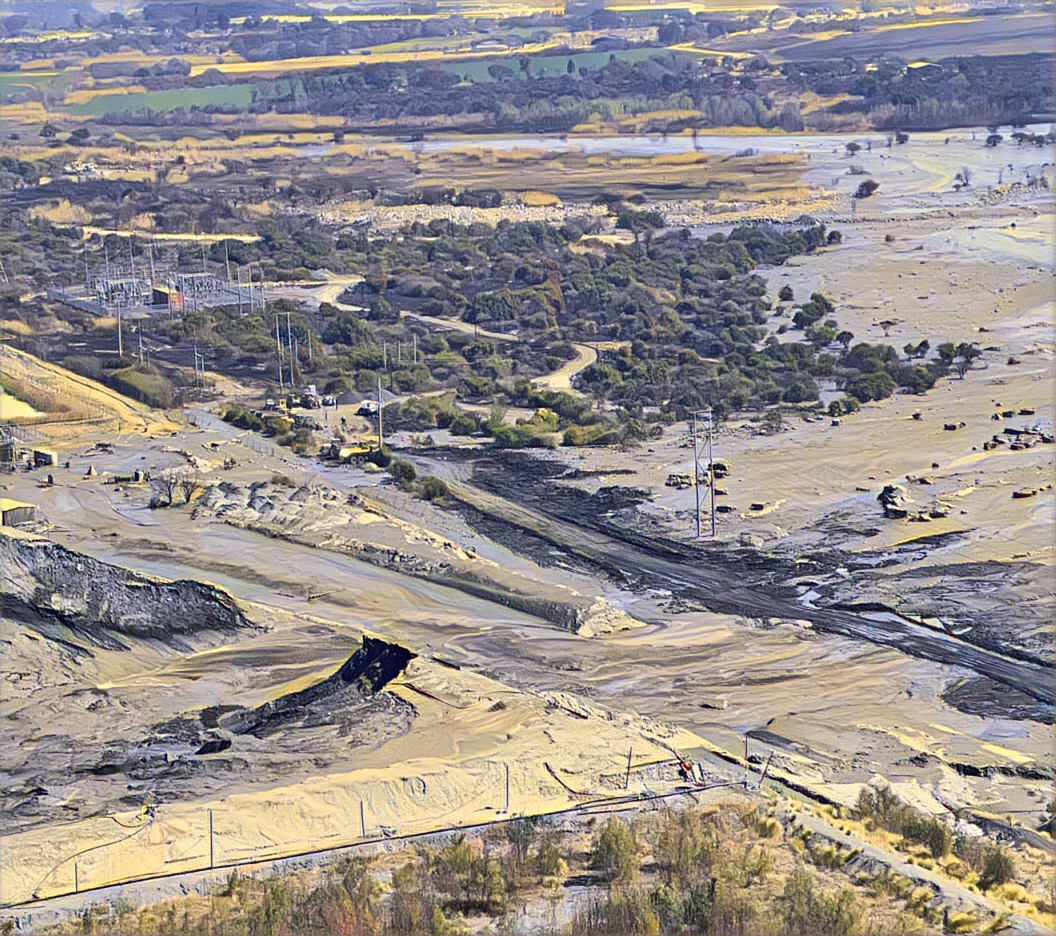
A major tailings storage facility at Samancor’s Dikwena Chrome mine near Brits in South Africa’s North West Province has failed, releasing almost all the tailings stored in one of its compartments and prompting an urgent investigation by government authorities.
The incident occurred at about 5:30pm on Thursday, August 13, 2026, at the mine’s tailings storage facility (TSF).
The Department of Water and Sanitation (DWS), together with the Limpopo-Olifants Catchment Management Agency (LOCMA) and the Department of Mineral and Petroleum Resources (DMPR), has since launched a joint assessment to establish the extent of the damage and determine the environmental consequences.
According to the DWS, the northern wall of Compartment 1B collapsed, allowing almost all the tailings and slimes stored in the section to escape.
Tailings are waste materials left behind after minerals are extracted from mined ore. When stored in large facilities, a structural failure can result in the rapid release of huge quantities of mud-like material, potentially threatening infrastructure, watercourses and surrounding communities.
In the Dikwena incident, the released material flowed across an access road near Eland Mine’s Maroelabult shaft.
Authorities said the material was, however, prevented from reaching the nearby R566 provincial road by a railway embankment and berms situated at the adjacent Eland Mine.
No Casualties Reported
Despite the scale of the failure, authorities confirmed that no deaths or injuries had been reported as a result of the incident.
However, the collapse caused significant damage to infrastructure in the surrounding area.
The DWS said mine infrastructure, a railway line and Eskom powerlines were damaged. The released material also polluted an unnamed tributary, raising concerns about possible impacts on local water resources and the surrounding environment.
DWS spokesperson Wisane Mavasa said the department and other authorities moved quickly to the site to assess the situation and establish the extent of the failure.
Environmental officials have begun testing the affected watercourse to determine whether the tailings release has caused harmful contamination.
Water samples have already been collected, with laboratory results still awaited.
The results are expected to provide authorities with more information about the extent of the pollution and whether additional environmental intervention will be required.
Further technical assessments are also expected to establish why the tailings facility failed and whether other sections of the facility could pose similar risks.
As a precautionary measure, the Department of Water and Sanitation has issued a verbal directive instructing the mine to stop depositing additional tailings into its tailings storage facilities while investigations continue.
The suspension is intended to minimise further risks while authorities and technical experts establish the cause of the failure and determine whether the facility can safely resume operations.