
KEY POINTS
- 14 suspected illegal miners died after a disused mine shaft collapsed near Rustenburg.
- South Africa is increasing efforts to seal and rehabilitate dangerous abandoned mine shafts.
- Tougher laws and penalties are being proposed to combat illegal mining and organised crime.
The deaths of 14 suspected illegal miners at Nkaneng near Rustenburg, South Africa, have once again drawn attention to the serious safety risks associated with abandoned and ownerless mines across the country.
The bodies were discovered on 11 August 2026 in a disused mine shaft close to the Nkaneng informal settlement in Marikana. The miners are believed to have been underground extracting platinum-group metals when part of the mine collapsed.
The incident has renewed concerns about the condition of abandoned mining sites and the growing risks posed by illegal mining activities in areas that are no longer actively operated or maintained.
The Department of Mineral and Petroleum Resources (DMPR) confirmed that the incident occurred within an area covered by a valid mining permit. The department said the loss of life was deeply regrettable and that it was assessing the circumstances surrounding the collapse.
Abandoned mines remain a major safety challenge
South Africa has thousands of former mining areas, some of which have been left without adequate rehabilitation or permanent security after mining operations ended.
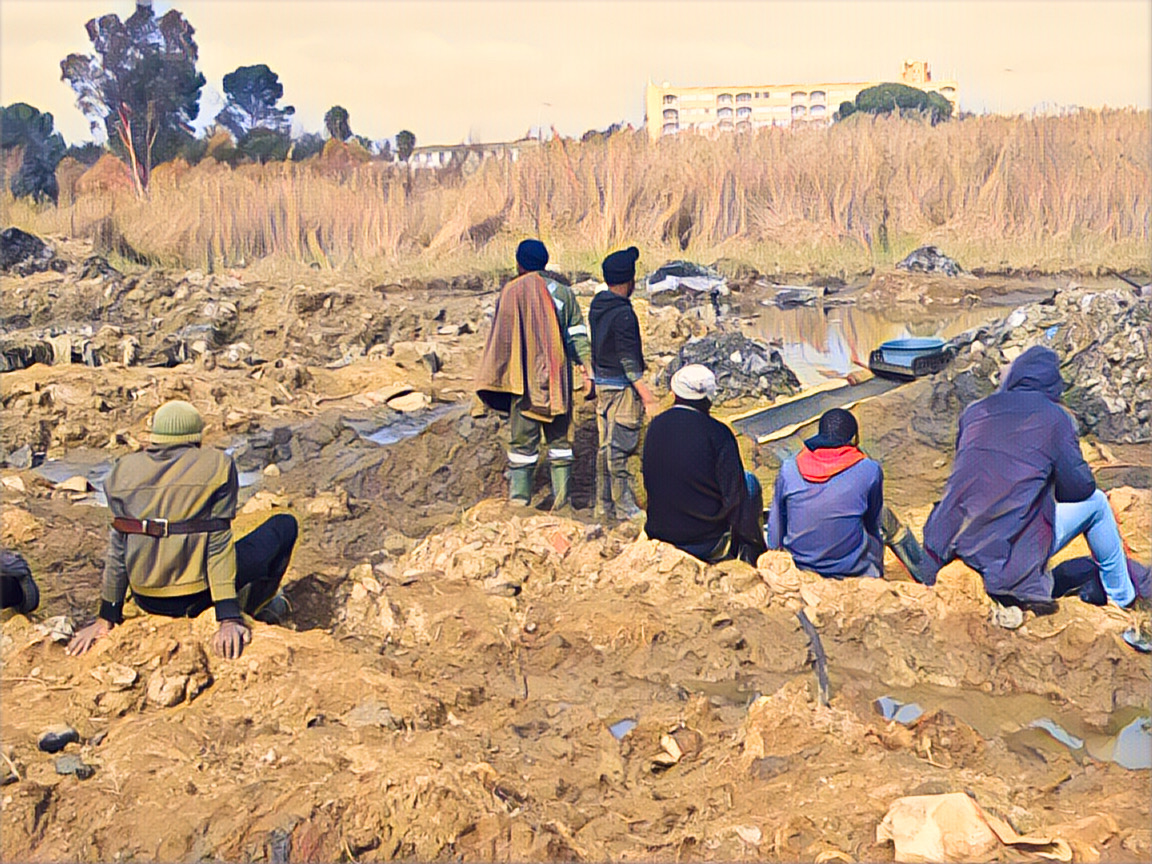
Open shafts, unstable underground workings and deteriorating infrastructure can become extremely dangerous over time. When such sites are not properly closed or rehabilitated, they can also provide easy access to illegal miners looking for remaining deposits of valuable minerals.
Illegal miners frequently enter abandoned workings in search of gold, platinum-group metals and other resources. Such operations can expose workers to cave-ins, toxic gases, flooding and other potentially fatal underground hazards.
The Nkaneng tragedy demonstrates the consequences of those risks, while also highlighting the difficulty authorities face in securing and rehabilitating old mining areas.
The deaths in Rustenburg occurred against the backdrop of a broader illegal-mining crisis that has become a major concern for South African authorities.
In July, two suspected illegal miners were shot dead after allegedly opening fire on police during an intelligence-driven operation in Roodepoort.
During the same month, police and military personnel arrested more than 200 suspected illegal miners during an operation at a gold mine west of Johannesburg.
These operations form part of a wider government campaign aimed at tackling illegal mining, organised criminal networks and the illegal movement of minerals.
Authorities have increasingly linked illegal mining to organised crime, with concerns extending beyond the immediate dangers faced by miners underground to the wider economic, environmental and security consequences of illicit mining.
The South African government has acknowledged that shutting down dangerous shafts and rehabilitating abandoned mining sites must be an important part of the response.
Under its 2026/27 budget, the DMPR allocated R140.87 million to the rehabilitation of derelict and ownerless mines. An additional R31.12 million was earmarked for the Artisanal and Small-Scale Mining Project.
The department has also been working to seal dangerous mine openings. During the previous financial year, 40 derelict and ownerless shafts were sealed in Gauteng.