
KEY POINTS
- Centinela workers began a strike after talks failed.
- Unions want equal benefits for all workers.
- Antofagasta says production targets remain unchanged.
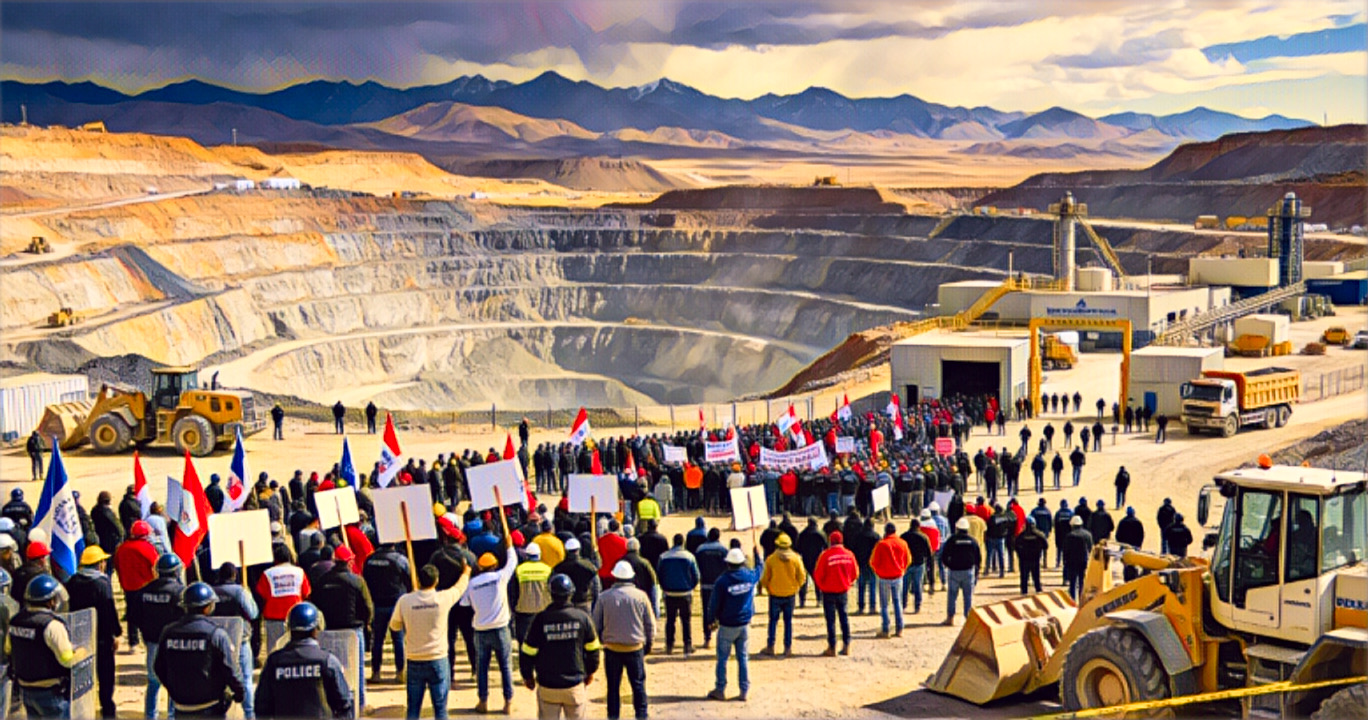
Workers at Chile’s Centinela copper mine have gone on strike after two unions rejected further contract negotiations with operator Antofagasta Minerals.
The strike began at 8 a.m. local time on Wednesday after government-mediated talks failed to produce an agreement between the unions and the mining company.
The development comes at a sensitive time for the global copper market, with supply already facing pressure from operational disruptions, natural events and declining ore grades in several producing regions.
Unions reject further talks
Two unions representing workers at the Centinela mine decided to strike after negotiations with Antofagasta Minerals failed to resolve their demands.
Union leaders said one of their key demands was for all workers to receive the same benefits, regardless of which union they belong to.
The unions had participated in government-mediated negotiations aimed at preventing industrial action, but the discussions ended without an agreement.
With the talks unsuccessful, workers proceeded with the strike on Wednesday morning.
Antofagasta says talks can continue
Antofagasta Minerals said it remains willing to engage with union representatives to find an agreement that considers the interests of both workers and the company.
The company acknowledged that strikes can have operational consequences but said it does not currently expect the industrial action to change its projected production.
“Despite the impacts typically associated with a strike, projected production remains unchanged,” Antofagasta said in a statement.
The company did not provide further details on how long the strike could last or whether contingency measures would be introduced if the stoppage continues.
Copper market watching Chile
The industrial action at Centinela is being closely watched because Chile is the world’s largest copper producer and any disruption to mining operations can affect expectations for global supply.
Copper prices have faced supply concerns as miners contend with operational challenges, natural events and declining ore grades.
The risk of a prolonged strike at a major Chilean mine could therefore add another layer of uncertainty to an already closely watched market.
Centinela is one of Antofagasta Minerals’ major copper operations, making the outcome of the labour dispute important for both the company and the wider copper industry.
For now, Antofagasta maintains that its projected production remains unchanged, despite the strike.