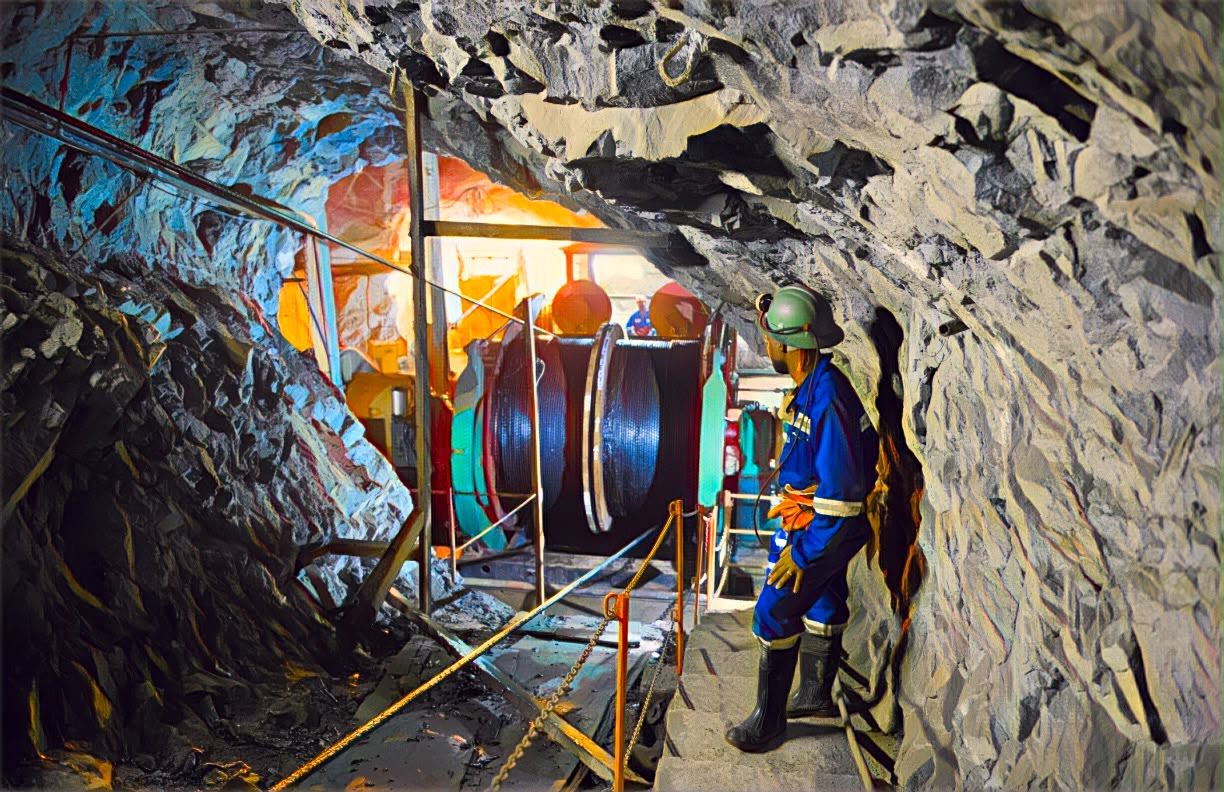
Namib Minerals has commissioned its expanded milling plant at How Mine in Zimbabwe, finishing the work ahead of the mid October deadline it had given investors.
The Nasdaq listed gold producer said Thursday the new plant lifts monthly processing capacity from about 40,500 tonnes to 55,000 tonnes, an increase of about 36%.
What the expanded milling plant changes
How Mine has been held back by its mill. In the first half, it processed 233,000 tonnes of ore, close to the most the old plant could handle. When grades slipped, the company had no spare capacity to make up lost ounces with more tonnes.
Output reflected that. How Mine produced 11,373 ounces of gold in the first half, down from 12,741 a year earlier, as the average grade fell to 1.7 grams a tonne from 1.9.
Chief Executive Tulani Sikwila said the focus now turns to ramping up to full capacity, targeted for December, and to delivering an annual run rate of more than 30,000 ounces at current grades.
The company expects the plant to take six to eight weeks to reach its full rate. Because of that timing, it cut its 2026 production forecast to between 26,500 and 27,000 ounces, down from 28,000 to 31,500, and said the change reflects timing, not a problem with the mine.
Redwing restart on the clock
Namib is also racing to restart Redwing Mine near Mutare, which has been on care and maintenance since 2019. Dewatering finished Sept. 21, ahead of plan, and a three month restart program began this month. First gold is targeted no later than January 2027.
The deadline is not arbitrary. Zimbabwe’s mines ministry has told foreign owned operators to be producing above set output and investment thresholds by Jan. 1, 2027. How Mine already clears the bar, while Redwing, still idle, does not. The restart will use the existing plant and be paid for from internal cash flow.
Money and risks
Higher gold prices have helped. Namib’s first half revenue rose 40% to $50.8 million as its average realized price jumped 48% to $4,195 an ounce, even though volumes fell 7%. Adjusted EBITDA climbed 76% to $19 million.
The balance sheet is tighter. Namib reported $1.8 million in cash and a working capital deficit of $42.9 million at June 30, though it has since drawn a $5 million Ecobank facility and agreed to raise a BancABC facility by $6.5 million to $13.2 million.
Management says about $27 million of current liabilities is ring fenced, settles in shares or is offset by an asset, and projects positive cash flow through June 2027.
Namib expects group all in sustaining costs of $2,650 to $2,850 an ounce for the year, above its earlier range, and says the second half should be lower as more ounces absorb fixed costs.
Investors will watch how quickly the mill reaches its full rate. The company says it will give 2027 guidance, including Redwing, in the first quarter. A slow ramp or weaker grades would test the forecast it has just lowered.