
Key points
- Only about 22 alluvial diamond operators remain active on South Africa’s rivers, compared with roughly 10 times that number previously.
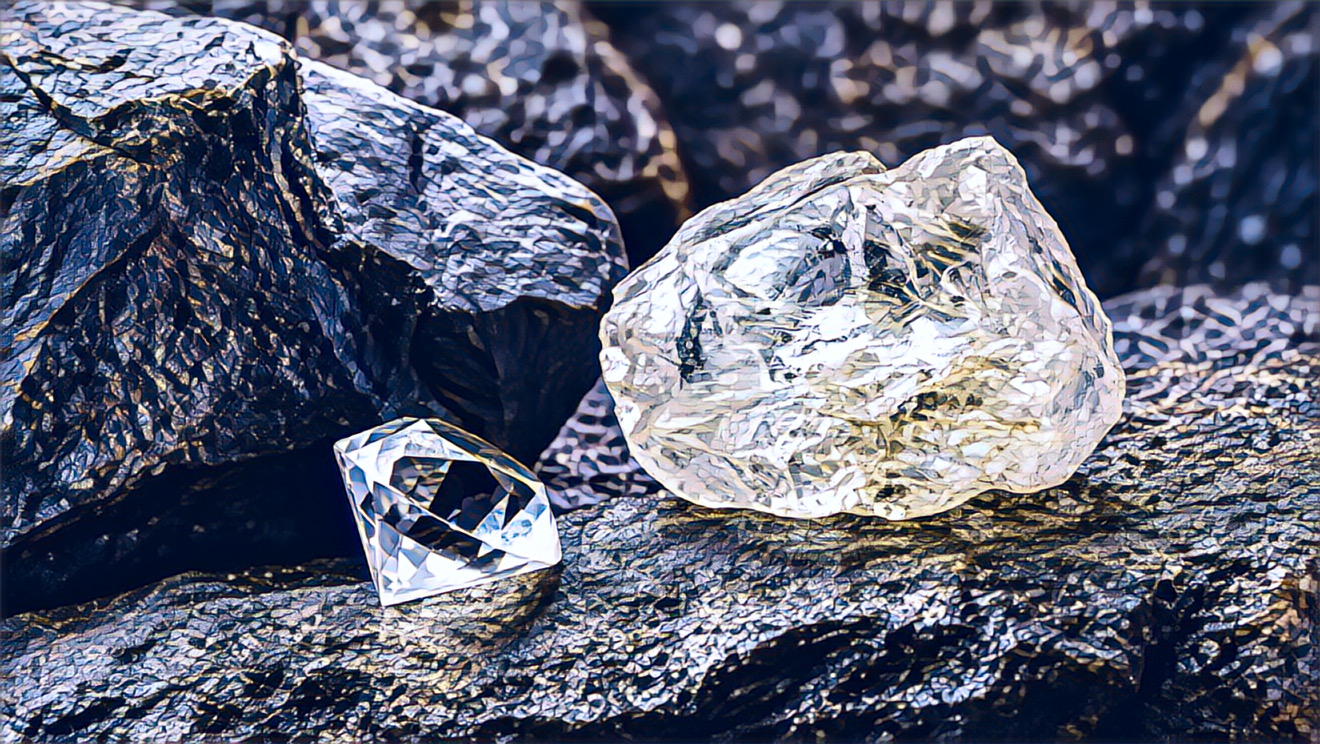
- Namdeb recovered a 176-carat white diamond, the largest at its Southern Coastal Mine in two decades, likely carried down the Orange River from Lesotho.
- Bristow says marketing, traceability and cutting innovation are driving a recovery in prices for larger, higher-quality natural stones.
South Africa needs to rebuild its alluvial diamond sector before the exceptional stones in its rivers are recovered by someone else, diamond industry veteran John Bristow has warned, pointing to a 176-carat white diamond that likely traveled down the Orange River from Lesotho before Namdeb picked it up offshore on the Namibian side of the West Coast.
The stone is the largest of its kind found at the Southern Coastal Mine in Oranjemund in two decades. Yet the odds of South Africans catching such diamonds as they pass through the country have fallen sharply.
According to Bristow, only about 22 alluvial operators remain active on the nation’s diamond-bearing rivers, down from roughly 10 times that number not long ago.
“This country has an incredible alluvial sector which hosts exceptional diamonds,” he told Mining Weekly in a Zoom interview, arguing that sustaining it should be a priority.
A marketing business first
Bristow, who developed a perovskite age-dating technique for kimberlites at the Australian National University in the 1980s with De Beers backing, framed the broader challenge plainly: natural diamonds are a marketing business, and the industry is relearning that.
“Going back to the period that I joined De Beers back in the 1980s and 1990s, De Beers’s marketing was just incredible,” he recalled. Today, he said, marketing is becoming more aggressive and more attuned to younger buyers.
As a result, prices for larger and better-quality stones are ticking up despite the wider gloom.
The business has survived the Great Depression and the global financial crisis, he noted, and this downturn, though more severe, will pass. “It’ll be a different business, but it’ll be a solid business again,” he predicted.
Traceability and the synthetic question
Bristow does not dismiss lab-grown diamonds. He pointed out that General Electric began producing synthetics in 1954 and De Beers soon followed, with factories on the East Rand that later moved to Ireland.
Synthetic stones now serve in surgical scalpels, cancer drug delivery and even cosmetics. Consequently, seeing them sold cheaply in Johannesburg and Cape Town jewelers is no surprise.
The answer for natural stones, he argued, is provenance. De Beers has invested heavily in traceability technology that can effectively fingerprint a diamond and prove where it came from, which Bristow saw firsthand during the 2023 Kimberley International Diamond Symposium visits to Cullinan, Debswana and the Diamond Trading Company.
Moreover, cutting and polishing have advanced far beyond the old lap-and-powder methods. He urged readers to visit cutter Greg Katz at Melrose Arch to see exceptional West Coast, Orange River and Vaal River stones being worked.
Innovation, he said, is the norm in diamonds, natural or synthetic, and that is what will carry the natural business back.