
KEY POINTS
- Australia is preparing for first gas from the Beetaloo Basin, with initial production expected to supply Darwin and test the commercial potential of its shale resources.
- The basin holds an estimated 7 trillion cubic feet of gas but faces difficult geology, high infrastructure costs and political challenges.
- US expertise and Japanese investment are supporting the project, while future demand could come from LNG exports, domestic industry and Northern Territory data centres.
Australia is preparing to enter a new phase of its energy industry as gas production from the vast Beetaloo Basin in the Northern Territory is expected to begin next month.
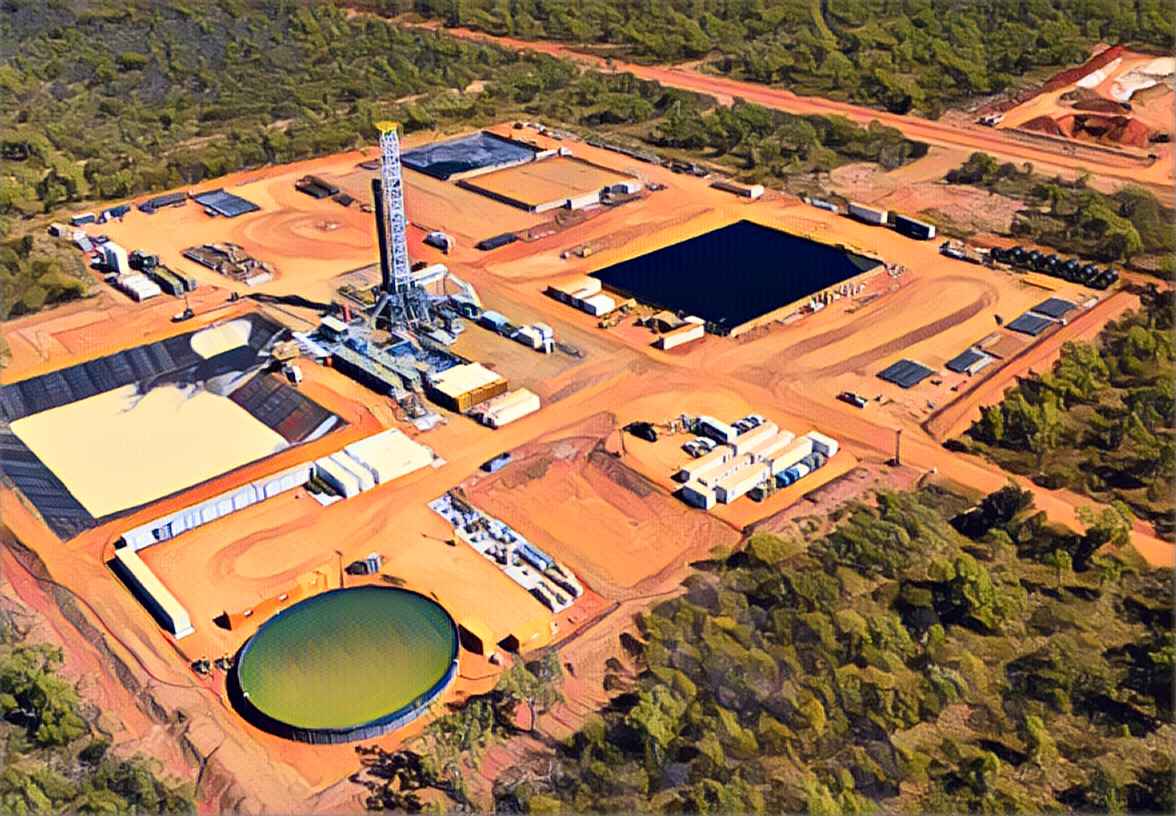
The development is being closely watched because it could determine whether Australia can build a commercially viable shale gas industry on a scale comparable with the United States. The first production will come from Tamboran Resources’ Shenandoah project, located in one of the basin’s most promising areas.
Gas will travel about 500 kilometres north to Darwin, providing the first practical test of whether Beetaloo’s enormous underground resources can be developed economically and connected to markets.
The basin is estimated by Geoscience Australia to contain about 7 trillion cubic feet of gas. Supporters believe the resource could eventually supply domestic industries, power data centres in the Northern Territory and provide additional gas for Australia’s lucrative LNG export sector.
Tamboran plans to begin with production of about 40 terajoules, or roughly 37 million cubic feet, of gas per day from its Shenandoah project.
Beetaloo Energy is expected to follow later this year with another 15 terajoules per day.
The initial volumes are relatively small and are expected to broadly meet Darwin’s daily gas requirements. However, developers see the early production as an important commercial and technical test.
The companies will be able to monitor how quickly production from individual wells declines and assess the costs involved in maintaining output. Those results will be crucial in determining whether the basin can be expanded into a large-scale shale operation.
Tamboran chief executive Todd Abbott, who joined the company from US shale producer Seneca Resources in January, has set an ambitious long-term target. The company expects production could eventually exceed 1 billion cubic feet per day.
If achieved, such output could potentially support a significant expansion of Australia’s LNG export capacity.
The Beetaloo Basin has significant similarities with major shale regions in the United States, but its geological characteristics make development more challenging.
The basin’s rocks are around 1.3 billion years old, compared with roughly 400 million years for the Marcellus shale formation in the United States. The much older rocks have become harder and more compacted, creating additional technical challenges for drilling and hydraulic fracturing.
Billions of dollars will be needed for expansion
Developing the Beetaloo on a commercial scale will require substantial additional investment, particularly in pipelines and other infrastructure connecting the remote basin with Darwin and potential export markets.
Tamboran raised more than A$280 million in April through listings in Sydney and New York as it seeks to finance the next stage of development.
The project has also attracted significant international interest, particularly from US shale investors and service companies with experience in unconventional gas production.
US-based Liberty Energy, founded by current US Energy Secretary Chris Wright, is providing drilling services to Tamboran. The involvement of US shale specialists is expected to help Australian operators apply techniques and cost-saving practices developed during America’s shale boom.
Japanese energy giant Inpex has also taken a stake in Beetaloo acreage controlled by Texas-based Formentera Partners. The investment is particularly significant because Japan is one of the most important markets for Australian LNG.