
KEY POINTS
-
Major automakers and energy firms back hydrogen-powered heavy trucks.
-
Platinum remains essential in hydrogen fuel cells and emission-control systems.
-
Global hydrogen fuel cell vehicle market projected to reach $2.1bn by 2030.
Major automotive and energy companies are strengthening their commitment to hydrogen-powered heavy-duty transport in Europe, with the World Platinum Investment Council (WPIC) saying the technology is gaining support as countries pursue cleaner freight and logistics operations.
Companies backing the development include Volvo Group, Daimler Truck and Toyota Motor Corporation, alongside energy and infrastructure businesses such as TotalEnergies, Bosch, Air Liquide, Teal Mobility and MB Energy.
According to WPIC’s latest 60 Seconds in Platinum report, the companies are calling for supportive government policies, wider availability of hydrogen-powered vehicles and an integrated supply chain to accelerate the adoption of the technology.
Hydrogen is increasingly being considered an important complement to battery electric vehicles (BEVs), particularly for heavy-duty transport applications where direct electrification may be difficult or less practical.
Platinum plays key role in hydrogen technology
Platinum is an important component in the two main powertrain technologies used in hydrogen mobility: hydrogen fuel cells and hydrogen combustion engines.
In fuel cells, platinum acts as a catalyst in proton exchange membrane technology, helping convert hydrogen and oxygen from the air into electricity. The process produces water and heat as by-products.
In hydrogen combustion engines, platinum-based catalysts help reduce harmful nitrogen oxide emissions generated during high-temperature combustion.
The growing interest in hydrogen-powered transport therefore presents opportunities for platinum demand, particularly if commercial vehicle manufacturers expand production and adoption of hydrogen systems.
Lhyfe CEO Matthieu Guesné said recent extreme weather events, geopolitical tensions and fluctuations in fossil fuel prices had strengthened the case for accelerating Europe’s energy transition.
He argued that direct electrification should remain the priority wherever practical, but added that green hydrogen would be necessary for industries and transport applications that cannot easily operate using electricity alone.
Guesné also said industrial companies were prepared to invest in hydrogen, but the pace of development would depend partly on governments implementing the regulations needed to support the market.
Volvo, Daimler and Toyota strengthen partnerships
Several major vehicle manufacturers have taken steps to advance hydrogen technology for heavy-duty transport.
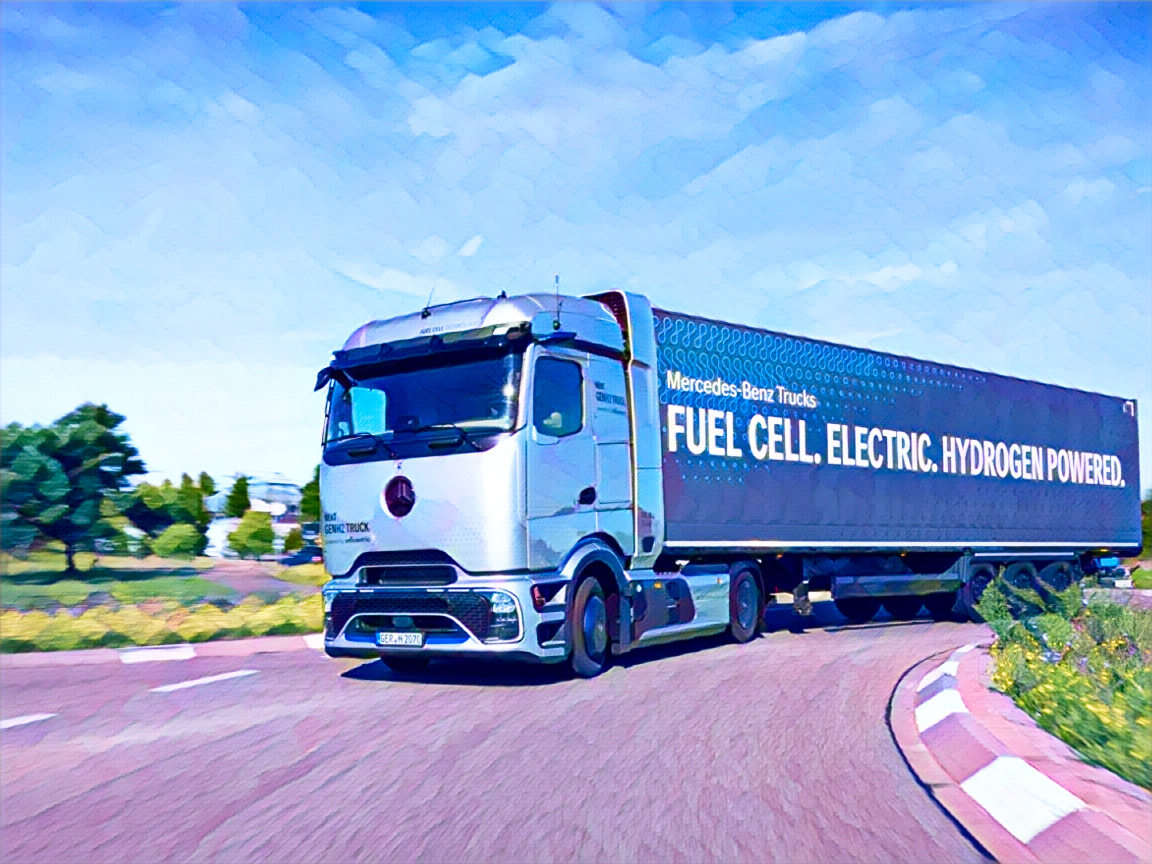
Volvo Group has started road trials involving hydrogen combustion trucks, while Daimler Truck has introduced its next-generation hydrogen fuel cell electric vehicle (FCEV) truck.
Toyota has also joined Volvo and Daimler in the Cellcentric hydrogen fuel cell venture. The partnership brings together the commercial vehicle expertise of the European manufacturers and Toyota’s experience in fuel cell technology.
The collaboration is intended to develop, manufacture and commercialise fuel cell systems for heavy-duty vehicles used in both on-road and off-road operations.
It also aims to support the expansion of hydrogen production, supply and refuelling infrastructure.
Toyota’s third-generation fuel cell system, launched in 2025, was developed specifically for commercial vehicle applications. Compared with its previous generation, the system delivers twice the output and durability, improves fuel efficiency by 20% and comes at a lower cost.
The improvements are intended to make hydrogen-powered trucks more competitive with conventional diesel vehicles while offering zero-emission operation at the vehicle’s point of use.
Hydrogen trucks enter real-world transport trials
Toyota’s latest fuel cell technology is also being used in 40 heavy-duty vehicles participating in Scania’s pilot partner programme.
The programme allows Scania, part of the Volkswagen Group, to work with selected logistics and transport operators to test emerging sustainable transport technologies under actual operating conditions.
In the United Kingdom, Scottish transport and logistics company John G Russell recently became the first operator to introduce fuel cell electric vehicles into its daily operations on UK roads.
The company deployed three hydrogen-powered trucks developed through Scania’s pilot partner division.
The vehicles will be assessed under real-world logistics conditions to determine how hydrogen fuel cell technology performs alongside battery electric trucks as the freight sector moves towards lower emissions.
The trial is part of the government-backed ZENFreight programme, funded by the UK Department for Transport and delivered in partnership with Innovate UK.
Toyota has also partnered with Italian vehicle manufacturer Iveco through Empower, a European Union-funded project focused on zero-emission heavy-duty transport.
Under the arrangement, Toyota will supply the fuel cell system for Iveco’s next-generation hydrogen trucks, while Iveco will handle vehicle development, integration and validation.
Hydrogen fuel cell market projected to expand
The growing number of partnerships and demonstration projects points to increasing interest in hydrogen as part of the transition to cleaner commercial transport.
The global hydrogen fuel cell vehicle market was valued at $200 million in 2024 and is projected to reach $2.1 billion by 2030.
Factors expected to support expansion include the increasing adoption of hydrogen-powered commercial fleets, the development of refuelling networks and improvements in fuel cell efficiency and durability.
Other growth drivers include investment in green hydrogen production, artificial intelligence-enabled energy management systems, strategic partnerships among vehicle manufacturers and the development of autonomous hydrogen-powered vehicles.
For platinum producers, wider adoption of hydrogen fuel cells could create an additional source of demand for the metal. However, the pace of growth will depend on the commercial competitiveness of hydrogen vehicles, infrastructure investment and supportive government policies.