
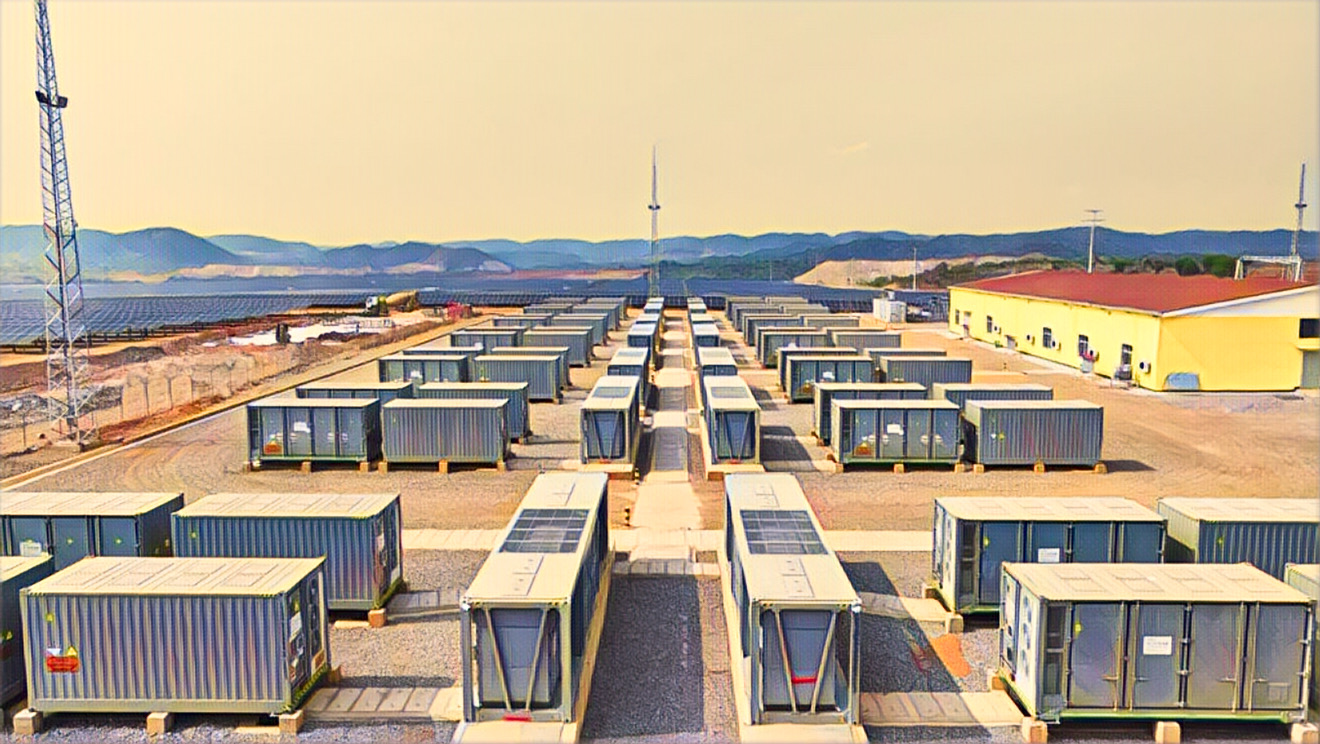
Kaipeng Mining (KPM) has commissioned the second phase of a dedicated renewable power system at its copper operations in the Democratic Republic of Congo, which the company describes as the largest mine-dedicated renewable power system in operation in Africa.
Phase II specifications
The company commissioned Phase II on Oct. 7 in Likasi. The system combines 440 MWp of solar capacity with 300 MW/900 MWh of grid-forming energy storage, linked by more than 10 interconnection lines into a ring-configured internal grid, KPM said. The design is meant to let power flow around any line that fails.
At full load, the renewable output can meet the power demand of its metallurgical operations, with annual clean power supply of up to 750 gigawatt-hours, according to KPM. Phase II followed Phase I within the same year, and the upgrade raised voltage levels, re-optimized the solar-storage-diesel ratio and expanded the grid-forming storage.
Why mines build their own power
Reliable electricity is a constraint on the Congolese copper belt, where processing steps such as roasting and electrowinning are power-hungry. KPM said its power system is one leg of a larger design that also covers acid for leaching and processing capacity for complex ores.
Phase I, which KPM described as the first large-scale renewable power system built for mine operating conditions in the DRC, reached full-capacity grid connection on schedule despite constrained cross-border logistics and underdeveloped local infrastructure. KPM said its approach has been used as a technical reference in the renewable-integration plans of more than 30 miners.
The company also cited green smelting and lower carbon emissions in copper production among the aims of large-scale adoption of green power.
A contested “largest” title
Other projects in the region make similar claims. Ivanhoe Mines said it completed a hybrid solar and battery system at its Kamoa-Kakula copper complex in the DRC that became fully operational in the third quarter of 2026, with a 433 MWp solar plant and 1,107 MWh of battery storage, providing 60 MW of baseload power, and called it the largest such facility at a mining operation in Africa.
By capacity figures alone, KPM’s solar array is slightly larger and Ivanhoe’s battery storage is larger in energy terms, so the title depends on how “largest” is measured. Neither claim was independently verified.
Separately, CrossBoundary Energy’s solar-plus-battery plant at Kamoa Copper, with 233 MWp of solar and 526 MWh of storage, reached commercial operation on Aug. 12 and supplies 30 MW of firm power around the clock.
The report did not disclose the project’s cost or financing, or whether the system displaces grid or diesel supply at the mine. The figures come from a Shanghai Metals Market report based on company information.