
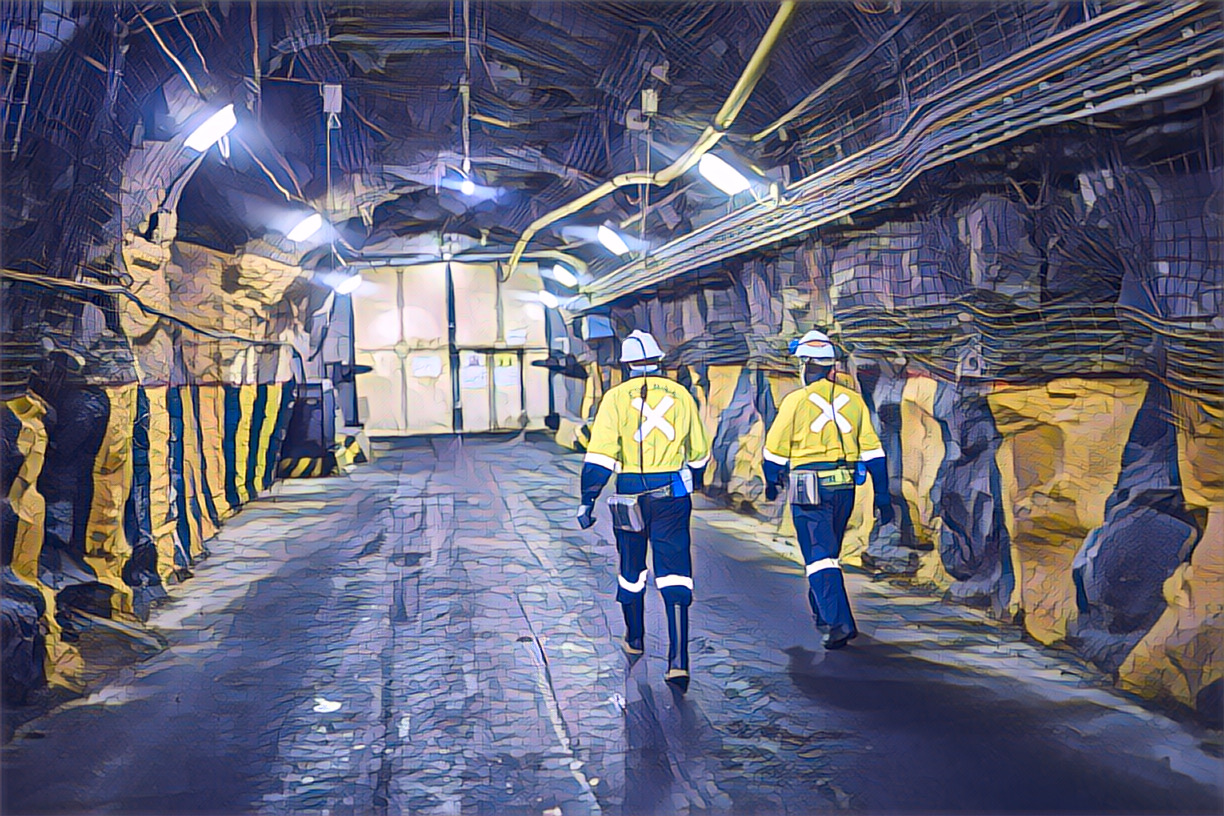
The South African mining future looks brighter on paper than it does on the production line, with rising profits, longer-lived mines and a government-backed plan to unlock new investment, but weak output and rising costs show how much work remains.
Minerals Council South Africa president Paul Dunne told the Johannesburg Indaba on Oct. 7 that mining’s renewal is central to tackling low growth, unemployment and weak investor confidence, according to an account of the address by Clarence Tshitereke, chief of staff in the mineral and petroleum resources ministry.
Mining was the country’s largest source of export earnings in 2025 at R814 billion, Dunne said. About 8.5 million South Africans are unemployed, and the International Monetary Fund expects growth of about 1% this year, well short of the 3% needed to absorb new job seekers.
Profits have surged. PwC’s SA Mine 2026 report found revenue among the companies it analyzed jumped 38% to R786 billion in the year to June, while free cash flow rose 147%. Production, however, rose just 2% and remains about 5% below 2019 levels.
PwC’s Andries Rossouw said disciplined spending has focused on efficiencies, brownfield optimization and mine-life extensions. “We haven’t really seen the large-scale expansion that we would like to see,” he said.
There is encouraging news underground. Gold reserves rose to 77 million ounces from 68 million in 2023, lifting average mine life to 29 years from 27. PGM reserves climbed to 298 million 4E ounces, extending average mine life to 43 years, and iron ore mine life rose to 23 years from 13.
The headwinds are visible in the latest data. Mining output fell 12.7% year on year in August, Stats SA said, with PGM production down 22.5%, iron ore down 16.2% and coal down 11.7%. Mining and manufacturing have been hit by higher fuel prices since April, and the Minerals Council says input costs remain elevated.
Logistics remain a drag. Transnet Freight Rail moved 167.9 million tons in the year to March, up 4.9% but well below the 226 million tons of 2017-18.
Operation Vulindlela is meant to address some of that. Its first workstream targets administrative bottlenecks and aims to unlock more than R50 billion in capital spending by February 2028, and a national mining cadastre is due by March 2027. The government-business partnership seeks annual growth above 3% and 1 million additional jobs by 2030.
The Minerals Council estimates that sustained annual mining growth of 3% could add about R65 billion to real GDP and support 50,000 to 100,000 additional jobs by 2035.
Dunne said exploration spending has fallen 80% over two decades and South Africa attracts less than 1% of global exploration capital. PwC pointed to uncertainty over security of tenure and the proposed Mineral Resources Development Bill, along with delays in approvals and permits.
Safety is another concern. South Africa had recorded 52 mining deaths this year as of early October, putting it on track for about 70, up from 41 last year.