
KEY POINTS
-
Japan will begin a 50-day test of deep-sea rare earth mining off Minamitori Island on February 2, 2027.
-
The project aims to reduce Japan’s dependence on China for critical minerals and secure more stable supplies.
-
Japan has invested about 50 billion yen ($314 million) in the project since 2018.
Japan will begin full-scale testing of rare earth mining from deep-sea mud off Minamitori Island on February 2, 2027, as the country intensifies efforts to reduce its reliance on China for critical minerals.
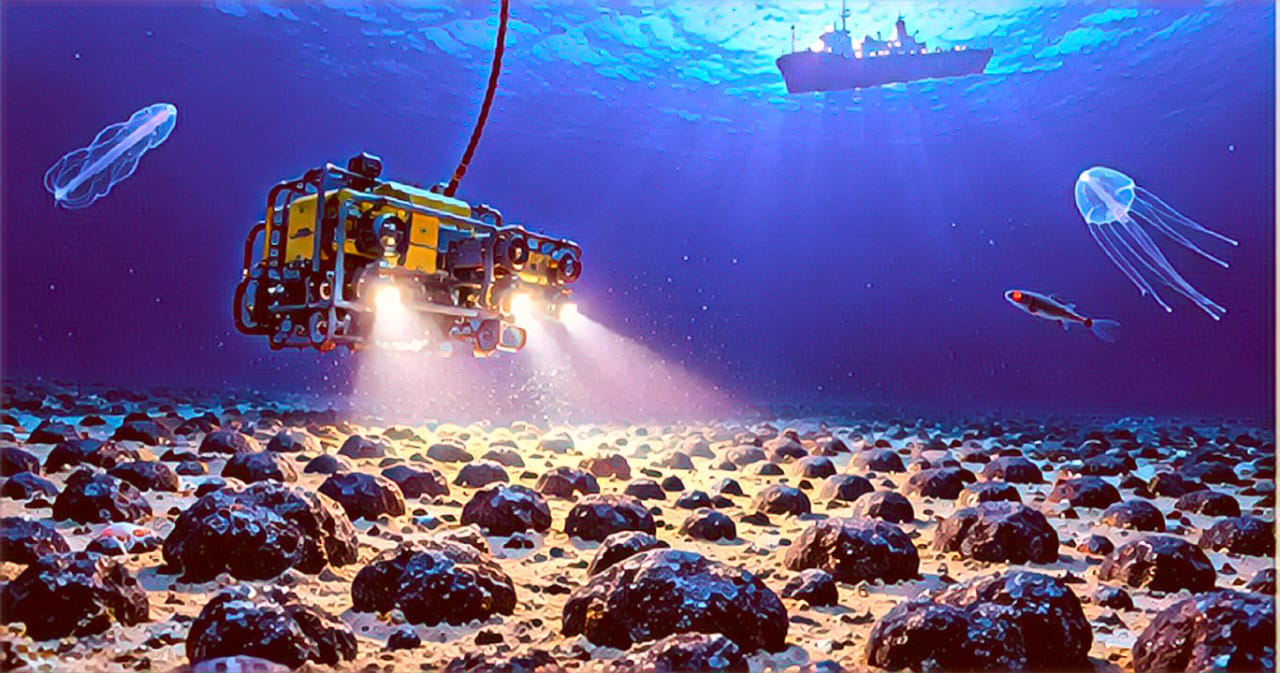
The 50-day test will involve extracting rare earth-rich mud from the seabed about 1,900 kilometres southeast of Tokyo.
Shoichi Ishii, programme director of the Cabinet Office’s national platform for innovative ocean developments, said the exercise would be followed by a comprehensive assessment, including an evaluation of the project’s economic feasibility.
Japan plans to compile the findings into a report by March 2028.
Ishii said the project remains at the research and testing stage, with the exercise intended to identify challenges that must be addressed before the technology can move towards commercial operations.
Japan prioritises supply security over profitability
Japan’s efforts to develop seabed rare earth mining are driven largely by concerns about securing stable supplies of critical minerals and reducing dependence on a single supplier.
Ishii said supply security and diversification were more important priorities for the project than its immediate economic feasibility.
He pointed to the sharp increase in the price of yttrium, a heavy rare earth mineral affected by Chinese export controls introduced in 2025.
According to Ishii, the price of the mineral has increased about 180-fold, underscoring the supply risks facing industries that depend on rare earth materials.
Japan and the United States are also expected to share findings from their research and development activities as they work to strengthen access to critical minerals.
Project has received $314 million in funding
The seabed mining programme has received cumulative funding of approximately 50 billion yen, equivalent to $314 million, between April 2018 and March 2027.
Earlier this year, Japan reported that it had successfully retrieved rare earth-rich mud from depths of approximately 6,000 metres for the first time.
Analysis of the material recovered from the seabed found that medium and heavy rare earth elements accounted for about 54% of its total rare earth content.
The February test is expected to build on those earlier results and assess the technology, operational challenges and potential requirements for larger-scale extraction.
Japan seeks to reduce dependence on China
The project forms part of Tokyo’s broader strategy to reduce its dependence on China for rare earth supplies, as Beijing tightens export controls on critical minerals.
Rare earth elements are important in the production of electric vehicles, wind turbines, electronics, defence equipment and other advanced technologies.
Japan’s planned seabed mining test could provide a potential alternative source of supply if the technology proves technically viable and can eventually be developed commercially.
However, the upcoming exercise remains a research and development test, and further assessments will be required before Japan can determine whether deep-sea rare earth extraction can become a commercially sustainable source of critical minerals.