
Key points
- Phase 3 of the Government-Business Partnership for Growth and Jobs commits to a manganese private sector participation transaction by December 2026.
- The consortium wants the National Rail Bill before Parliament and a fully operational Transport Economic Regulator by March 2027, as the scorecard promises.
- Producers back a “12×12” corridor strategy of 12 million metric tons each through Saldanha and Gqeberha, replacing the current 16-8 split.
South Africa’s Manganese Producers Consortium says the third phase of the Government-Business Partnership for Growth and Jobs is a direct test of whether rail reform can move from policy to delivery, and the country cannot afford to fail it.
The partnership, launched on Aug. 20, names freight logistics as a foundational enabler of growing the economy by more than 3% and creating a million new jobs by 2030.
According to the consortium, that recognition confirms its long-held view that logistics reform, and rail reform in particular, is a fundamental economic driver rather than a technical issue.
The partnership’s own scorecard already records 11 private train-operating companies entering the network, Durban ranking among the world’s most improved ports, albeit from a low base, and R14.7 billion in Budget Facility for Infrastructure funding approved for rail maintenance backlogs.
However, the consortium warned that bulk commodity export corridors are still not receiving the priority they urgently demand, even though they suit globally proven private sector participation models with significant upside for the economy.
Hard deadlines on the table
What the producers welcome most are the specific deadlines. The scorecard commits to a manganese private sector participation transaction by year-end, the National Rail Bill reaching Parliament by March 2027 and a fully operational Transport Economic Regulator by the same date.
These targets echo what the consortium has supported for years. Until now, though, speed, sequencing and executable timelines were missing. As a result, the group says Phase 3 puts government’s own credibility on the line.
In addition, the consortium stressed that institutional design matters as much as targets. It called for named leadership, transparent milestones, consequences when delivery falls short and a capacitated, independent unit to drive bankable rail transactions without institutional veto or conflict.
The long-awaited manganese terminal at the Port of Ngqura and private participation on the Sishen-Saldanha Ore Export Corridor cannot wait any longer, the consortium said.
Producers stand ready with capital, committed volumes and long-term rail allocation arrangements to anchor those projects.
Distance makes logistics decisive
Meanwhile, geography sharpens the stakes. The Kalahari holds a world-class manganese endowment, but it sits about 1,000 kilometers from any port, which turns manganese mining into a mining-plus-logistics business.
Logistics already accounts for roughly a third of mining costs, and that share will matter more as producers progressively move from open pit to higher-cost underground operations.
Two corridors currently serve the industry. The Saldanha line carries little other traffic, which makes it an efficient bulk route. By contrast, the multi-freight line to Gqeberha shares capacity with passenger and automotive traffic and feeds into a four-terminal port complex that pushes up costs.
Consequently, several producers argue for a 12×12 strategy: 12 million metric tons a year through Saldanha and 12 million through Gqeberha, instead of the current split of 16 million to Gqeberha and 8 million to Saldanha.
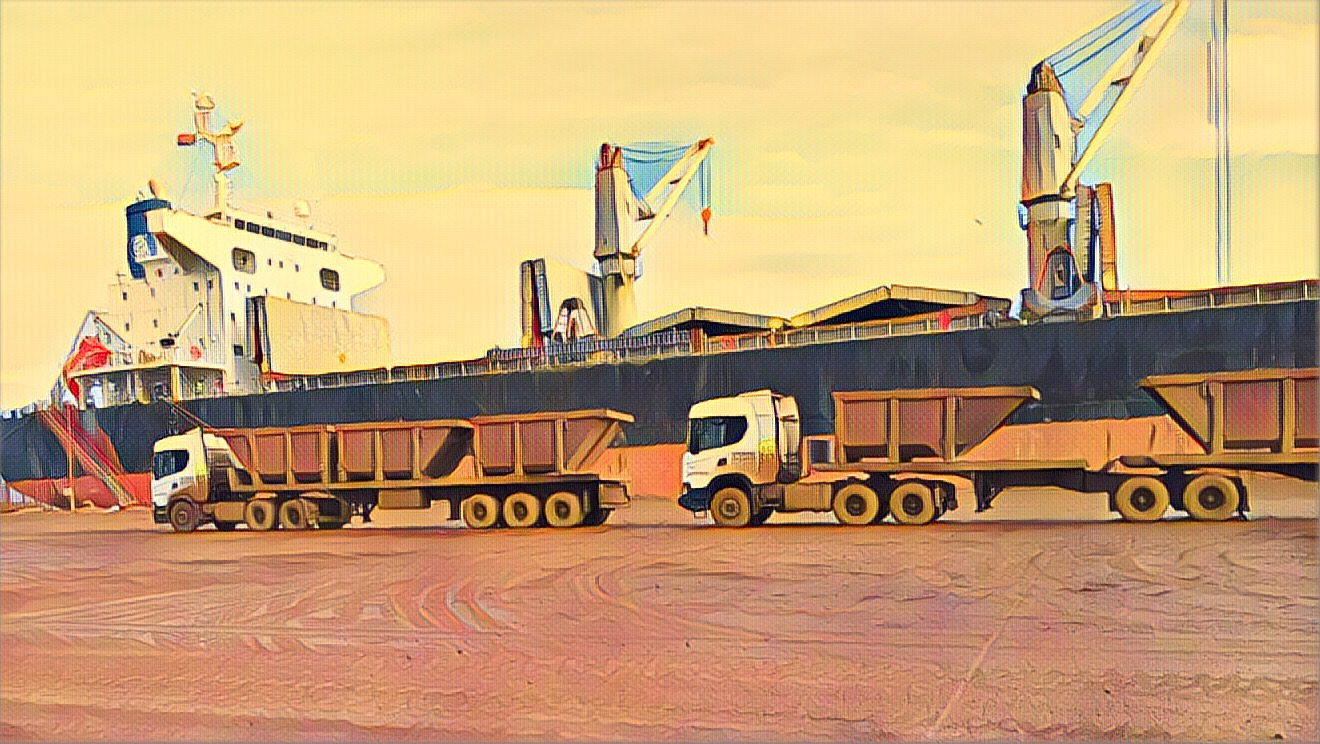
Ultimately, the consortium says success will be measured not by a launch event but by closed transactions, more trains running, unlocked investment and fewer trucks on the road.